
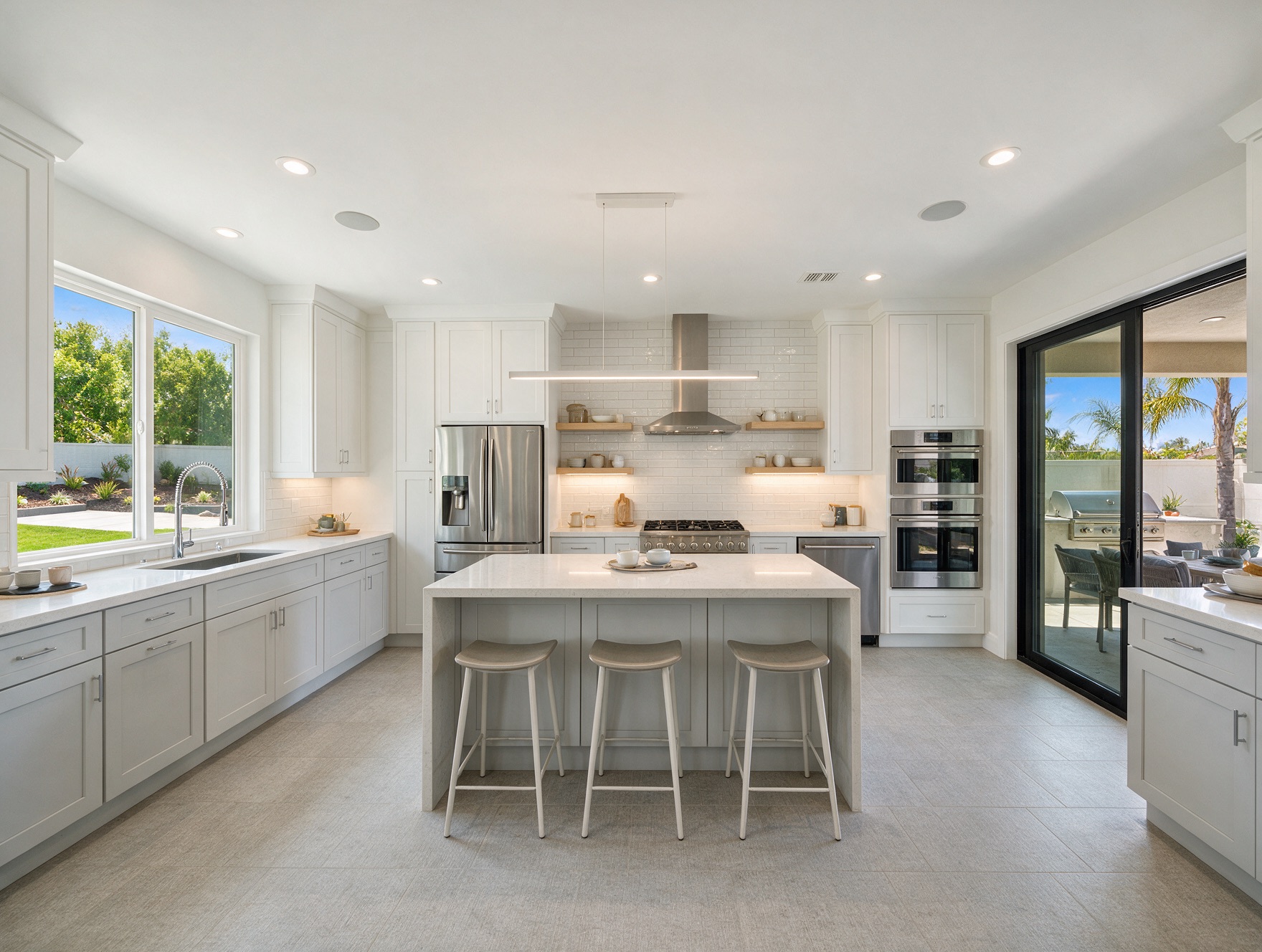
When people start planning a kitchen, the countertop question comes up fast: quartz or granite? You’ll hear strong opinions both ways. The truth is simpler than most salespeople make it sound — both are excellent. They’re just different, and one will fit your life better than the other.
We install both in-house, so we don’t have a horse in this race. Here’s the straight version.
What they actually are
This is the part that clears up most of the confusion:
- Granite is natural stone. It’s cut right out of the earth, so every slab is one of a kind. The patterns and specks are real, formed over a very long time.
- Quartz is man-made. It’s crushed natural stone mixed with resin and pressed into slabs. That means the color and pattern are more consistent and predictable.
Neither is “fake.” Quartz is still mostly real stone — it’s just engineered so you know exactly what you’re getting.
How they look
This is where personal taste matters most:
- Granite has natural movement and variation. No two kitchens look the same. If you love that one-of-a-kind, pulled-from-nature look, granite is hard to beat.
- Quartz gives you a cleaner, more uniform look. If you want that calm, consistent surface — or a crisp solid white or gray — quartz nails it.
A good tip: go see the actual slab before you decide. A photo or a small sample never tells the whole story, especially with granite, where one slab can look very different from the next.
How they hold up day to day
Here’s the part that matters once you’re actually living with it:
- Quartz needs almost no care. It doesn’t soak up spills, so you don’t have to seal it. Wipe it and move on. It resists stains from wine, coffee, and oil very well.
- Granite is tough but a little more needy. It’s natural stone with tiny pores, so it should be sealed — usually once a year — to keep stains out. That’s a few minutes with a bottle, not a big deal, but it is a thing you have to remember.
- Both handle heat well, but we tell every client the same thing: use a trivet anyway. Thermal shock can crack any stone, and a cracked counter is a bad day.
- Both can chip if you drop something heavy on an edge. Neither is indestructible.
If “I never want to think about my counter again” sounds like you, quartz is the easy answer. If you don’t mind a yearly five-minute habit for a natural look, granite is wonderful.
What they cost
Here’s where we’ll save you some stress: the price ranges overlap a lot. You’ll find affordable options and expensive options in both materials. The biggest cost drivers usually aren’t quartz-vs-granite at all — they’re:
- How much counter you have. A big kitchen with an island needs more slab, period.
- The specific color and pattern. Rare, dramatic slabs cost more whether they’re granite or quartz.
- The edge and cutouts. Fancy edges and lots of cutouts add labor.
So don’t pick based on a guess that one is “the cheap one.” Pick the look and the lifestyle you want, then we’ll find the right slab inside your budget. For most kitchens, countertops are one line item inside the typical $30K–$60K remodel — important, but not the whole story.
So which should you choose?
Here’s the honest rule of thumb we give clients:
- Choose quartz if you want low-maintenance, a clean consistent look, and zero yearly upkeep.
- Choose granite if you love natural, one-of-a-kind stone and don’t mind a quick annual seal.
There’s no wrong answer. We’ve put both in beautiful San Diego kitchens and the owners love them for different reasons.
One last honest tip: don’t let anyone rush you into a decision in a showroom. The lighting in a showroom is different from the lighting in your kitchen, and a slab that looks perfect under bright store lights can read differently at home. Take a sample home if you can, set it on your counter, and look at it in the morning and at night before you commit. It’s a free step that saves a lot of second-guessing later.
Want help comparing real slabs for your space? That’s exactly the kind of thing we walk through on our kitchen remodeling page — and we’re glad to do it in person. Reach out whenever you’re ready, and we’ll give you a straight recommendation based on how you actually use your kitchen.