How to Budget for a Remodel (Without Any Nasty Surprises)
Most of the stress people feel during a remodel comes down to one thing: the money didn’t go the way they expected. The budget looked fine on paper, then reality showed up with a bigger bill.
The fix isn’t a bigger wallet. It’s a budget that tells you the truth from the start. Let’s build one together.
Start with a real number, not a hope
Before you fall in love with tile, you need a ballpark. Here’s where honest San Diego pricing lands today:
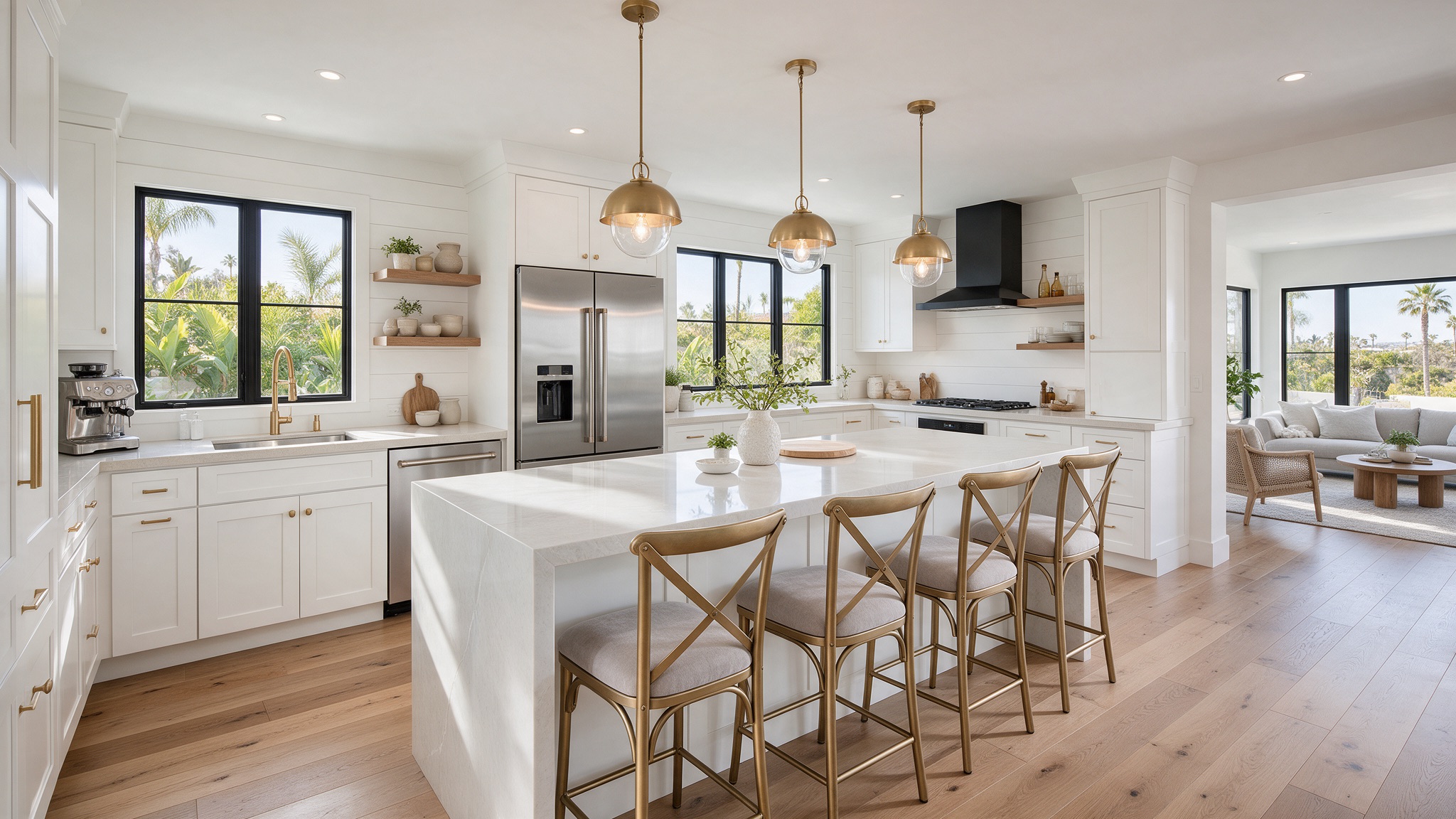
- Kitchen remodels: about $30K to $60K, with most landing near the middle.
- Bathroom remodels: about $25K to $50K, depending on how much you’re changing.
- ADUs (a separate small home on your lot): usually starting around $150K.
These are ranges, not promises. A kitchen where you keep the layout and swap finishes sits at the low end. Move walls, move plumbing, or add high-end everything, and you climb toward the top. The number depends on your choices — which is actually good news, because it means you have control.
Know the three things that move the price
When you understand what drives cost, you stop guessing. Three things matter most:
- Are you moving plumbing or walls? Keeping the sink and stove where they are saves real money. Moving them means new pipes and electrical, and that adds up fast.
- What finishes do you pick? A countertop can cost $40 a square foot or $200 a square foot. Same for tile, cabinets, and fixtures. This is where budgets quietly balloon.
- How big is the space? More square footage means more materials and more labor. Simple, but it matters.
Build in a cushion — always
Here’s the rule that saves people: set aside 10% to 15% of your budget for surprises.
Why? Because older homes hide things. You open a wall and find old wiring that isn’t up to code, or a leak nobody knew about. A good contractor will tell you straight when this happens — but the money has to come from somewhere. If you planned for it, it’s a small bump. If you didn’t, it feels like a disaster.
So if your kitchen budget is $50K, treat it like $43K to $45K of “planned” work and keep the rest in reserve. If you don’t need it, great — you came in under.
Watch out for the quote that’s too good
When you collect bids, you’ll sometimes see one that’s way lower than the rest. It’s tempting. But a lowball quote usually means one of two things: the contractor left stuff out, or they plan to make it up later with “surprise” charges once you’ve already started.
This is where the honest-versus-pushy difference really shows. Some big remodel companies in San Diego quote a scary high number, then “call their manager” and drop the price if you sign tonight. That pressure is the whole game. A real builder gives you a clear, complete number and lets you think it over.
Ask every contractor the same question: “What’s included, and what’s not?” Get it in writing. Vague quotes are where the pain lives.
Don’t forget the costs outside the contract
A few expenses live outside the build itself. Plan for them so they don’t catch you:
- Permits, if your project needs them. Fees vary by city, so ask early.
- Eating out or a temporary setup if your kitchen is down for a few weeks.
- Small design choices — hardware, paint, light fixtures — that add up in the final stretch.
None of these are huge on their own, but together they’re real. A quick list up front keeps them from feeling like a pile-on at the end.
Match the project to your goal
One last thing: spend where it matters to you. If you love to cook and host, your kitchen is worth the investment. If a growing family or an aging parent is the reason, an ADU might be the smarter dollar. There’s no single right answer — only the one that fits your life.
A good contractor will actually talk you out of spending on things that won’t pay off for you. That’s the kind of conversation worth having before a single dollar is spent.
The bottom line
A good remodel budget isn’t about spending less. It’s about knowing — before you start — what things really cost, where money hides, and how much cushion to keep. Do that, and the whole project feels calm instead of scary.
At Reliable Builders (CSLB #1139785), we’d rather give you honest numbers up front than surprise you later. If you’d like a no-pressure conversation about what your project might really cost, reach out anytime — even if you’re just starting to plan.