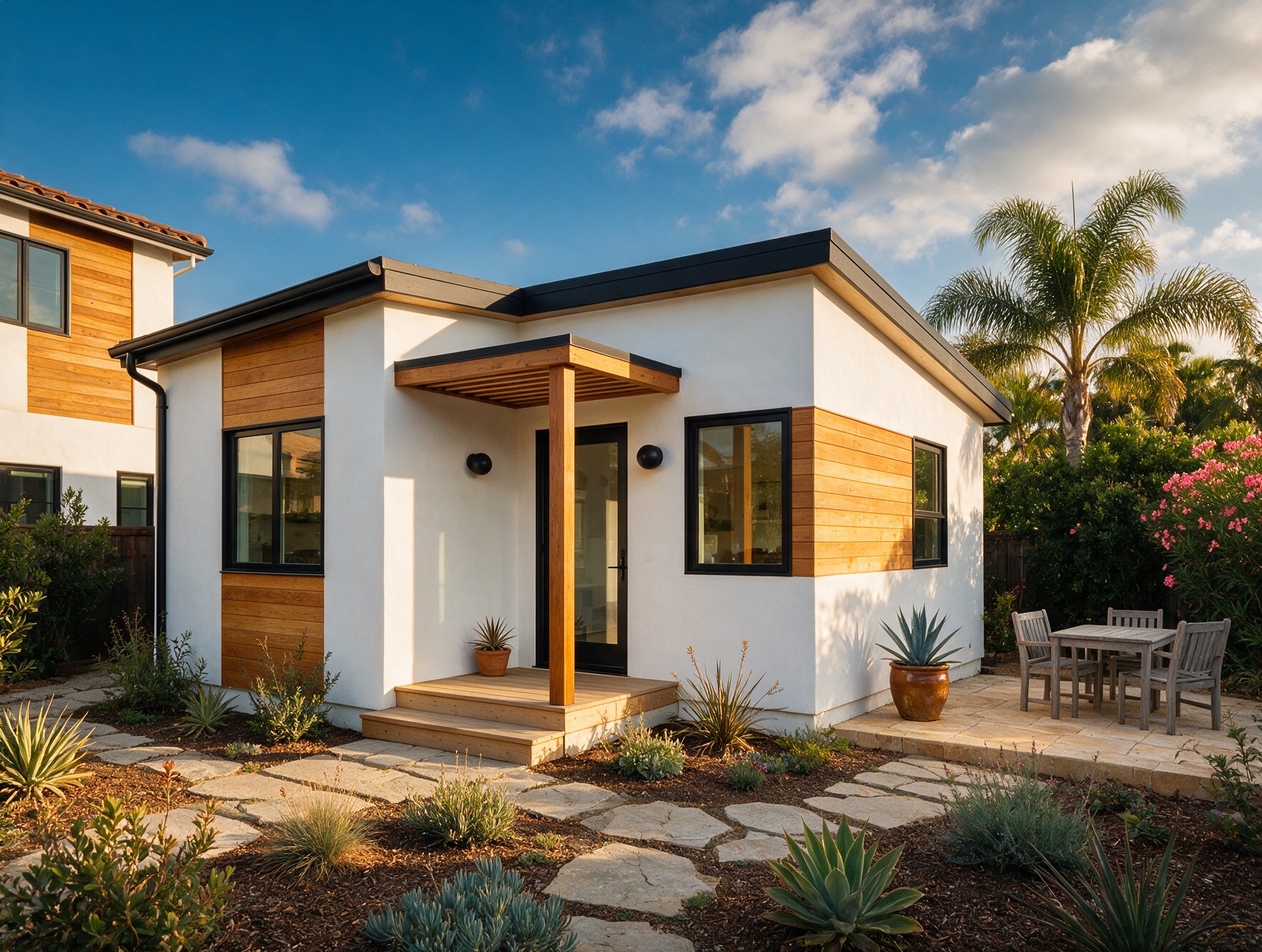
One of the first questions homeowners ask us is, “How long is this going to take?” It’s a fair question. You’re adding a home to your property, and you want to plan your life around it.
The honest answer: an ADU is a real building project, so it takes real time. But when you know what each stage involves, the timeline stops feeling scary and starts feeling like a plan.
Let’s walk through it.
The short answer
Most San Diego ADU projects move through four stages:
- Planning and design
- Permits
- Construction
- Final inspection and walkthrough
Some of these stages overlap. Some wait on the city, which is out of anyone’s hands. The build itself — the part where you actually see your ADU go up — is usually the most predictable piece once permits are in hand.
We won’t quote you an exact number of weeks here, because anyone who promises a precise timeline before seeing your lot is guessing. What we can do is show you what drives the clock.
Stage 1: Planning and design
This is where the project takes shape. We look at your lot, your goals, and your budget. Because we work with a design partner, you get a layout that actually fits how you’ll use the space.
This stage includes checking the basics before money goes into detailed drawings:
- Where the unit can sit on your lot (setbacks and space).
- Whether your utilities can support it.
- What size and style make sense for you.
What speeds it up: knowing what you want and making decisions on time.
What slows it down: big changes to the plan after drawings start. Every change means redrawing.
Stage 2: Permits
Here’s the stage most people don’t expect. Before anyone picks up a hammer, the city has to approve the plans. This protects you — it’s how you end up with a legal, safe, financeable ADU instead of a liability.
Permit timelines depend on the city and how busy they are. This part is largely out of a builder’s control. The best thing we do is submit a clean, complete package the first time, so it doesn’t get kicked back for missing pieces.
The good news: California’s statewide ADU laws have made this process more predictable than it used to be. More lots qualify, and the rules are clearer.
What speeds it up: complete, correct plans submitted once.
What slows it down: incomplete submissions, city backlogs, or surprise lot issues.
Stage 3: Construction
This is the exciting part — your ADU actually gets built. For a detached ADU, that means a new foundation, framing, roof, and running utilities out to the unit. For a garage conversion, the shell already exists, so the work is mostly insulating, finishing, and adding a kitchen and bath.
Because a conversion skips the foundation and framing, it’s often a shorter build than a brand-new detached unit. That’s one reason conversions cost less, too.
During this stage, you’ll see steady progress and get regular updates. We believe you should never have to wonder what’s happening on your own property. One of the biggest fears homeowners tell us about is a contractor who goes quiet. That’s not how we work.
What speeds it up: final selections (tile, fixtures, finishes) picked early.
What slows it down: waiting on back-ordered materials, or decisions made late.
Stage 4: Final inspection and walkthrough
Near the end, the city inspects the finished work to confirm everything is up to code. Then we walk through the ADU with you, handle any final touch-ups, and hand you the keys to a space that’s ready to live in.
This is where “built legal” pays off. A permitted, inspected ADU is done right and recognized by the city — an asset you can rent, refinance against, or sell with confidence.
How to keep your project on track
You actually have a lot of control over the timeline:
- Decide early. Picking finishes and layout up front prevents delays later.
- Keep changes small. Big mid-project changes restart drawings or re-order materials.
- Work with a licensed builder. A clean permit package and an organized crew save weeks.
The honest takeaway
An ADU is worth the wait, but it’s not instant — and anyone who tells you otherwise isn’t being straight with you. The best way to feel good about the timeline is to understand it, plan for it, and work with a builder who keeps you in the loop the whole way.
Want a realistic timeline for your lot? We’ll take a look and tell you straight — no pressure. Get in touch, read more on our ADU page, or see where we build, like La Mesa and El Cajon.